
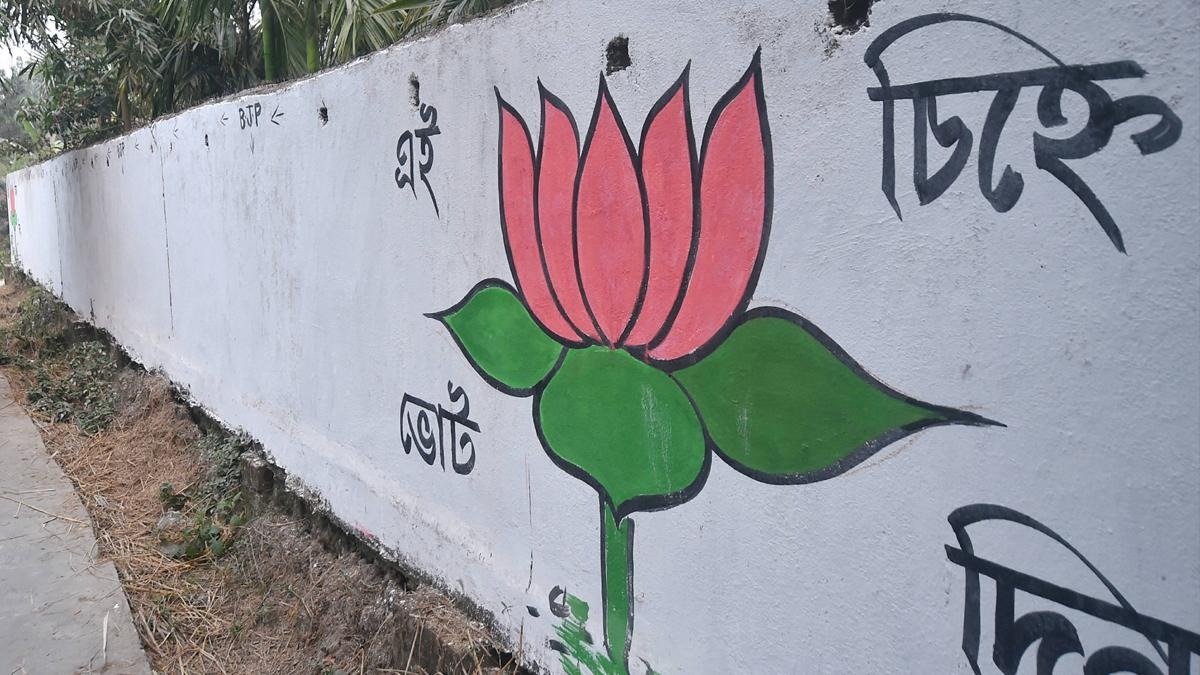
KOLKATA: The ink on the fingers of millions of voters across West Bengal is barely dry, yet the atmosphere across the state feels less like a celebration of democracy and more like a collective gasp for air. For decades, Bengal has been described as a “bastion”, a fortress of a specific brand of regional politics. But as the 2026 election phases conclude, the historic voter turnout—reaching a staggering 93.19% in the first phase and nearly 90% in the second—isn’t just a statistic; it’s a scream.
The question echoing from the tea stalls of Siliguri to the crowded lanes of Kalighat is no longer just about who wins but about what has been lost. When did political competition turn into a “Khooni Khel” (game of blood), and has the Trinamool Congress (TMC) finally pushed the state too far?
Democracy in the “Blood Tub”
In Bengal, an election date isn’t just a day for the ballot; for many, it’s a day for the bunker. The state has earned a grim reputation as India’s “blood tub”, where political disagreement is often met with the scent of gunpowder. Even as Prime Minister Modi notes a slight decrease in large-scale carnage compared to 2021, the underlying fear remains systemic.
Enjoying this essay by Kartikey Tripathi? Sign up for the Longform Reads weekly newsletter for our latest dispatches.
The numbers are staggering. From the 2021 Assembly elections, which saw nearly 300 violent incidents and 58 deaths, to the 2023 Panchayat polls, where approximately 50 people were killed, the death toll has climbed steadily. We aren’t just talking about scuffles; we are talking about crude bombs in Murshidabad, the chasing and beating of candidates in Kumarganj, and the systematic displacement of thousands of BJP karyakartas.
Despite the BJP holding a powerful mandate of 77 seats from 2021, their workers are often treated like fugitives in their own villages. This isn’t just “rough” politics—it is a breakdown of the social contract where the state’s monopoly on violence is handed over to party goons. For the middle-class family in Kolkata, this means living with a constant low-grade anxiety; for the rural poor, it means choosing between their political conscience and their physical safety.
There is a silent, economic tragedy unfolding alongside the violence. Bengal was once the industrial heartbeat of India, but today it feels like an island, cut off from the reforms sweeping the rest of the country. According to recent NITI Aayog data, Bengal’s share in the national GDP has shrunk from 6.8% in 1990 to just 5.8%, with per capita income sitting 20% below the national average.
The reason? A deep-seated fear within the state leadership that allowing Central Government success will make the Prime Minister “too powerful”. This political insecurity has come at a massive cost to the common man:
- The Health Gap: While a poor labourer in Bihar or UP can use Ayushman Bharat for life-saving surgery in any top-tier hospital across India, a labourer in Bengal is tethered to the “Swasthya Sathi” card. While the state touts its success, the reality is a lack of portability. If a Bengali worker falls ill in Delhi or Mumbai, their state card is often just a piece of plastic.
- The Welfare Leak: Schemes like PM-KISAN and MGNREGA have become battlegrounds for corruption. The centre recently stopped MGNREGA funds, citing “serious irregularities”—including the use of machines instead of manual labour and the creation of 1.1 million fake job cards. When the centre demands a “clean list”, the state cries “discrimination”. The result? The genuinely poor go hungry, and the middle-class taxpayer sees their money swallowed by the “Syndicate” just so the party can save face.
For a middle-class Bengali, the stagnation is visible in the lack of high-paying IT or manufacturing jobs, forcing their children to migrate to Bangalore or Hyderabad. They see a state that is falling behind not because of a lack of talent, but because of a surplus of ego.
A State at War with Its Own Heritage
Perhaps the most painful fracture is cultural. There is a growing sense that being a practising Hindu in Bengal has become a political act of defiance. The social fabric is being stretched thin by a brand of secularism that many feel is one-sided.
When the Chief Minister celebrates Eid with state-sponsored fanfare but treats Saraswati Pooja or Durga Puja immersions as administrative burdens to be restricted, the bias is no longer subtle. In many districts, chanting “Jai Shree Ram” has been branded a “provocation” that leads to police action, while the state government is seen as turning a blind eye to radicalisation in border pockets.
The poor and middle-class Hindus feel like second-class citizens in their own ancestral land. They watch as the “SIR” (Special Intensive Revision) of electoral rolls deletes millions of names, often under controversial circumstances, while illegal immigration is allegedly overlooked to secure a “vote bank”. This isn’t “liberalism”—it is a targeted erosion of the state’s traditional identity.
Mamata Banerjee is often hailed by national media as a “liberal warrior”, but on the ground, her “chle chappate” (henchmen) rule with an iron fist. The narrative that the state is “neglected” by Delhi is a convenient smokescreen used to hide the fact that the TMC has consistently rejected help that didn’t come with a party sticker attached.
The poor man in a Bengal village doesn’t care about the ego of a “Didi” or a “Modi”—he cares about the ₹6,000 from PM-KISAN that he didn’t get for years. He cares about the PMAY (Awas Yojana) house that was denied to him because he didn’t pay a “cut” to the local TMC promoter. The middle-class professional cares about the fact that their state has a debt-to-GSDP ratio of 38.4%, one of the highest in India, signalling a bankrupt future.
The record-breaking voter turnout in these first phases—crossing 92% in some districts—suggests that the fear psychosis is finally breaking. People are tired of seeing their brothers killed for a flag, tired of their hospitals being decades behind, and tired of being told their culture is a “threat” to peace.
If the BJP breaches the “Bengal Bastion” this time, it won’t just be a political win. It will be a sign that the people of Bengal—the silent, suffering majority—have decided that no Gundaraj is strong enough to stop a population that has finally lost its fear. They are voting not just for a party, but for the right to breathe again in a state that was once the Shonar Bangla of their dreams.